

Heating and Cooling for Older Homes: 2026 Guide
Table of Contents
Why Older Homes Struggle With Heating and Cooling
Comparing Your Options for Heating and Cooling
Ductless Mini-Split and Reverse Cycle Systems
High-Velocity HVAC and Hydronic Heating
Climate Control for Weatherboard Homes: Practical Solutions
Retrofitting Insulation in Older Homes for Better Efficiency
Draft Sealing and Thermal Envelope Improvements
VEU Rebates for Heating and Cooling: What You Can Claim
The Victorian Energy Upgrades Program
Other Schemes Worth Checking
The Electrification Cost-Benefit Question
What to Ask Before You Sign
Smart Home Integration and Noise Considerations
Common Mistakes to Avoid When Upgrading
Frequently Asked Questions
Last Updated: September 27, 2026
Why Older Homes Struggle With Heating and Cooling
Heating and cooling for older homes is rarely a simple swap-and-replace job, because the building itself was designed around a completely different set of assumptions about comfort and airflow. Draughty floorboards, uninsulated walls, open fireplaces and single-glazed windows all leak heat in winter and let it build up in summer. The result is a house that is expensive to run and stubbornly uneven from room to room.
Comparing Your Options for Heating and Cooling
A comparison table helps here. The right choice depends on your ceiling height, whether you have existing ductwork, and how much you can modify the building.
Option | Best For | Key Strength | Main Limitation |
Ductless mini-split / reverse cycle | Rooms with no ducts, heritage interiors | High efficiency, zone control | One head per room |
High-velocity HVAC | Period homes with no space for ducts | Small flexible outlets | Higher install complexity |
Hydronic heating | Cold climates, allergy sufferers | Silent, even radiant warmth | Slower to heat up |
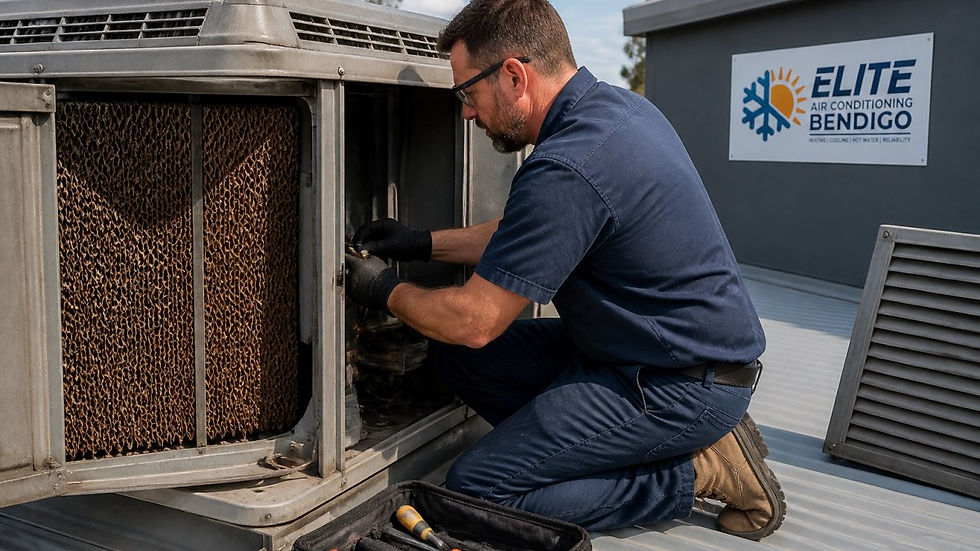
Evaporative cooling | Dry summer regions | Low running cost | Needs ventilation, adds humidity |
Ductless Mini-Split and Reverse Cycle Systems
Ductless mini-split systems are the most flexible answer for older homes because they need no ductwork at all. A reverse cycle unit heats and cools from the same head, which suits a climate with genuine seasons. You install one indoor head per zone, so a cold back bedroom no longer drags down the whole house. The trade-off is that each head is a visible wall fixture, which matters in a heritage interior.
High-Velocity HVAC and Hydronic Heating
High-velocity HVAC pushes conditioned air through small, flexible tubing that can thread through wall cavities and ceiling spaces where conventional ducting will not fit. It is a strong fit for retrofitting into period homes without tearing them apart. Hydronic heating, by contrast, uses a boiler or heat pump to circulate warm water through radiators or underfloor loops. It is silent and gentle, but it responds slowly, so it suits households that want steady background warmth rather than fast blasts of heat.
Climate Control for Weatherboard Homes: Practical Solutions
Climate control for weatherboard homes starts with treating the building envelope as the first line of defence, not the air conditioner. Weatherboard walls can be insulated during renovation, and ceiling insulation delivers the single biggest comfort gain in most older houses. Once the shell is tighter, a correctly sized system works far less hard.

Retrofitting Insulation in Older Homes for Better Efficiency
Retrofitting insulation in older homes is the highest-return upgrade you can make, and it is usually cheaper than replacing the heating and cooling system itself. Ceiling insulation, wall insulation where cavities allow, and underfloor insulation all reduce how much heat escapes. The goal is a continuous thermal envelope with as few weak points as possible.
AEPowerHouseTV
Draft Sealing and Thermal Envelope Improvements
Draft sealing closes the gaps that let cold air pour in: around skirting boards, window frames, doors, and old wall vents. Check the R-value of any insulation you add, because a higher R-value means better resistance to heat flow. A blower-door test or a simple walk-around on a windy day will reveal most air leakage points. Ventilation still matters, though.
Pro Tip The cheapest comfort win in most older homes is ceiling insulation plus draft sealing around doors and windows. Do these before you spend money on a new system, and you will need a smaller, cheaper unit.
VEU Rebates for Heating and Cooling: What You Can Claim
Rebates are the single most misunderstood part of an upgrade, and the section most competitors gloss over. Here is how the main schemes actually work, and how to think about the economics of switching fuels.
The Victorian Energy Upgrades Program
The Victorian Energy Upgrades (VEU) program is administered by the Essential Services Commission and creates Victorian Energy Efficiency Certificates (VEECs) when an accredited provider installs an eligible upgrade (Victorian energy efficiency certificates). The discount you see at the point of sale is the value of those certificates, assigned to the installer, who passes it on as a reduced price. You do not claim it yourself, the accredited provider does, which is why the discount only exists if you use a participating installer.
Eligible activities relevant to older homes have historically included:
Replacing an inefficient electric resistance heater with a reverse cycle air conditioner
Upgrading to a high-efficiency gas or electric hot water system
Installing ceiling, wall or underfloor insulation
Draught sealing and weather sealing
Replacing halogen lighting with LED
Other Schemes Worth Checking
Beyond VEU, there are two other avenues most homeowners never ask about:
Federal and state concessional schemes. Various state governments and the Commonwealth run concession-based programs for pensioners and low-income households, often delivered through energy retailers rather than installers. These are separate from VEU and can sometimes be stacked.
Retailer and network incentives. Some electricity retailers and distribution networks offer their own appliance or demand-response incentives, particularly for heat pump hot water and for allowing the network to cycle your system during peak events.
The Electrification Cost-Benefit Question
For a home currently running on gas heating or an old resistive electric system, the real decision is not "which rebate is biggest" but "what is the total cost of ownership over ten years." A reverse cycle heat pump typically delivers roughly three to four units of heat per unit of electricity consumed (its coefficient of performance), whereas resistive electric heating delivers about one.
Watch Out Rebate eligibility is tied to the specific product model, the installer's accreditation and the activity rules in force on the date of installation. A quote that promises a rebate without naming the activity code and the accredited provider is not a quote you can rely on.
What to Ask Before You Sign
Which VEU activity code applies to my installation?
Is the discount applied at the point of sale, or do I pay upfront and wait?
What evidence do you need from me, and what happens if the certificate is rejected?
Does this system qualify for any retailer or network incentive as well?
What is the estimated annual running cost at my current tariff?
Smart Home Integration and Noise Considerations
Smart home integration lets you control an older home's heating and cooling from a phone, set schedules, and run zones independently, which is a major upgrade for a house with uneven temperatures. Most modern reverse cycle and mini-split systems support app control and can link to broader smart home platforms. For legacy systems without native connectivity, smart thermostats and controllers can add scheduling and remote access.
Common Mistakes to Avoid When Upgrading
The biggest mistake is skipping a proper HVAC load calculation and letting someone guess the system size. An oversized unit short-cycles, wastes energy, and leaves hot and cold spots, exactly the problem you were trying to fix.
Buying on price alone without checking efficiency ratings and running costs
Ignoring the building envelope and expecting a new system to fix a leaky house
Choosing the wrong system type for the home's layout and existing ductwork
Assuming a rebate applies without confirming current eligibility
Forgetting about noise, especially for bedrooms and outdoor units near living areas
Watch Out Never let an installer size a system by floor area alone. A proper HVAC load calculation accounts for insulation, glazing, orientation and air leakage. Skipping it is the fastest route to an uncomfortable, inefficient home.
Frequently Asked Questions
What are the best heating and cooling options for older homes?
Reverse cycle split systems suit most older homes because they heat and cool without ductwork. High-velocity HVAC fits where ceiling space is tight, and hydronic heating works well with existing radiators. The right choice depends on your layout, insulation and budget. An on-site assessment and load calculation will identify which option delivers consistent comfort in your specific property.
Are there government rebates available for upgrading heating in older homes?
Yes. The Victorian Energy Upgrades program offers point-of-sale rebates on eligible heat pumps, reverse cycle systems and insulation upgrades. Eligibility depends on the system type, efficiency rating and your property. A reputable installer can confirm what you qualify for and handle the paperwork, so you receive the discount without chasing the process yourself.
Can I install ducted air conditioning in a house with limited ceiling space?
Traditional ducted systems need generous ceiling or underfloor space, which many older homes lack. High-velocity HVAC solves this by using small, flexible ducts that fit through existing cavities. This makes it possible to add zoned climate control without major structural work or losing ceiling height in your rooms.
How do I improve thermal efficiency in a period home?
Start with draft sealing around windows, doors and floorboards, then add ceiling insulation and underfloor insulation where accessible. These steps reduce air leakage and lift your effective R-value before you spend on new equipment. Upgrading the thermal envelope first means a smaller, cheaper heating and cooling system can keep the home comfortable.
What is the most energy-efficient way to heat a weatherboard home?
A reverse cycle heat pump paired with a sealed, well-insulated thermal envelope is the most efficient combination for weatherboard homes. Heat pumps deliver more heating per unit of electricity than resistive heaters. Sealing drafts and adding insulation reduces the load, so the system runs less often and your energy consumption drops further.
How do I manage humidity and airflow in a heritage-style property?
Use ventilation that suits the building, such as subfloor vents kept clear and bathroom exhaust fans ducted outside. Reverse cycle systems with a dehumidification mode help in damp periods. Avoid sealing a heritage home so tightly that moisture cannot escape, as trapped damp damages timber and plaster over time.
Why does my older home have hot spots and cold spots?
Uneven temperatures usually come from air leakage, poor insulation and ductwork that was never designed for the layout. Zoning lets you control individual areas instead of heating or cooling the whole house. A proper HVAC load calculation identifies where the losses occur, so the fix targets the cause rather than adding a bigger system.
Request a Quote


Comments