

Heating and Cooling Rebates 2026: What Victorians Should Know
Table of Contents
How Heating and Cooling Rebates Work in Victoria
Victorian Energy Upgrades Eligibility: Who QualifiesWhat the Rebate Discounts Cover
What the Rebate Discounts Cover
Split System vs Ducted Heating: Which Rebate Suits Your HomeHow the Rebate Value Differs by System TypeThe Real Trade-Off: Zoning vs. Whole-Home CoverageMatching the System to Your Home's LayoutA Practical Decision Framework
How the Rebate Value Differs by System Type
The Real Trade-Off: Zoning vs. Whole-Home Coverage
Matching the System to Your Home's Layout
A Practical Decision Framework
How to Apply for Energy Rebates: Step-by-Step ProcessDocumentation You Need Before Starting
Documentation You Need Before Starting
Why You Need Accredited VEU Providers for Installation
Common Application Mistakes and How to Avoid Them
Beyond the Rebate: Long-Term Savings on Energy BillsWhy Maintenance Determines Your Real SavingsThe Pre-Season Service That Pays for ItselfFilter Maintenance by System TypeThe Carbon Footprint Angle Competitors IgnorePairing Maintenance with the Right Energy Plan
Why Maintenance Determines Your Real Savings
The Pre-Season Service That Pays for Itself
Filter Maintenance by System Type
The Carbon Footprint Angle Competitors Ignore
Pairing Maintenance with the Right Energy Plan
Conclusion
Frequently Asked Questions
Last Updated: September 8, 2026
Heating and cooling rebates in Victoria are point-of-sale discounts that reduce the upfront cost of upgrading to an energy-efficient reverse cycle system, applied instantly by an accredited provider rather than paid back later. At Elite Air conditioning Bendigo, we guide homeowners through the Victorian Energy Upgrades (VEU) program. A common misconception is that the paperwork is overwhelming; in practice, an accredited installer handles the entire rebate application, so you never deal with forms or wait for reimbursement. The real challenge is understanding what you qualify for and choosing the right system, which is exactly what this guide simplifies for you.
How Heating and Cooling Rebates Work in Victoria
Heating and cooling rebates are discounts on the purchase and installation of eligible energy-efficient equipment, delivered through the Victorian Energy Upgrades program. Rather than a cashback scheme, the discount is applied to your invoice at the point of sale, which means the saving happens before you pay. The program works by creating tradable certificates (VEECs) for each upgrade; the value of those certificates is what funds your discount. According to the Essential Services Commission's VEU guidance, only accredited providers can create these certificates, which is why your installer must be registered to pass the saving on to you.
The scheme targets older, inefficient systems. Replacing a gas heater or ageing split system with a modern reverse cycle unit reduces energy consumption, lowering grid demand and household running costs. Because the discount value is tied to energy performance, higher-efficiency units attract larger discounts. The upgrade must meet compliance standards, and installation must be performed by an accredited professional for the rebate to apply.
Victorian Energy Upgrades Eligibility: Who Qualifies
Eligibility for Victorian Energy Upgrades is broader than most expect. Owner-occupiers, renters, landlords, and commercial premises can access heating and cooling rebates, provided the property has an existing system being replaced. The key requirement is upgrading from an older, working system to a new, high-efficiency model; the program does not fund first-time installations in new builds.
The Victorian Energy Upgrades program overview confirms that eligible households include those with concession cards, though concessions are not mandatory for most heating and cooling upgrades. What matters most is the age and condition of your current equipment. A system that is over ten years old, or one that uses ducted gas heating, is a strong candidate because the energy performance improvement is significant. An eligibility assessment is usually conducted on-site by the accredited provider, who checks your existing unit and calculates the system capacity required for your home.
What the Rebate Discounts Cover
The discount applies to the supply and installation of the new system, including the unit, labour, and necessary electrical work tied to the upgrade. It does not cover additional ductwork modifications, new thermostat wiring beyond the standard scope, or repairs to your existing system. Some programs also extend to removing your old gas heater, though this is not universal. Always confirm exactly what your quoted discount includes before agreeing to proceed, since the installation discount varies based on the system's kW rating and efficiency tier.
Split System vs Ducted Heating: Which Rebate Suits Your Home
The choice between a split system and ducted reverse cycle heating is not just about house size, it is about how the rebate value interacts with the system's capacity, your home's existing infrastructure, and the way you live in the space. Both system types qualify under the Victorian Energy Upgrades program, but the rebate calculation differs, and that difference often determines which option delivers the best financial outcome.
How the Rebate Value Differs by System Type
Under the VEU program, the discount is calculated from the system's capacity (measured in kilowatts of heating output) and its energy performance. A single split system typically ranges from 2.5 kW to 7.5 kW of heating capacity, and the rebate scales with that figure. A ducted system, by contrast, usually starts around 10 kW and can reach 18 kW or more for larger homes, which means the certificate value, and therefore the discount, is substantially higher in dollar terms.
However, the upfront cost of ducted installation is also significantly higher. A typical ducted reverse cycle install involves running flexible ductwork through the ceiling cavity, cutting registers into each room, and often upgrading the switchboard to handle the higher electrical load. Split systems, on the other hand, require only a small refrigerant line set between the indoor and outdoor units, which keeps labour costs lower and installation time shorter.

The Real Trade-Off: Zoning vs. Whole-Home Coverage
The most common mistake homeowners make is assuming ducted is always better because the rebate is larger. In practice, ducted systems condition the entire home whether you are using every room or not. Unless your ducted system has zoning, which adds cost and is not always included in the quoted rebate price, you pay to heat or cool rooms you are not occupying. Split systems give you room-by-room control by default, which often results in lower running costs for households that only use a few rooms regularly.
Feature | Split System | Ducted Reverse Cycle |
Typical heating capacity | 2.5 kW - 7.5 kW per unit | 10 kW - 18 kW+ |
Rebate value per system | Lower ($ hundreds) | Higher ($ thousands) |
Upfront cost before rebate | $1,500 - $4,000 | $8,000 - $15,000+ |
Installation time | Half a day per unit | 2-3 days |
Ceiling access required | No | Yes |
Zoning capability | Inherent (per room) | Optional, adds cost |
Best for | Single rooms, older homes, gradual upgrades | Open-plan, large homes, full retrofits |
Matching the System to Your Home's Layout
For a typical weatherboard home with a central hallway and separate rooms, multiple split systems often outperform a single ducted unit. Each split system is sized to the room it serves, so a 2.5 kW unit in a small bedroom runs less frequently than a 10 kW ducted system trying to condition the same space through a long duct run. The load calculation performed during the on-site assessment determines the required capacity for each zone, and an accredited provider will not simply recommend the largest system available.
Ducted systems make sense when the home has an open-plan living area that flows into a kitchen and dining space, or when the ceiling cavity is accessible and free of obstructions. They also suit households that want a single thermostat and consistent temperature throughout. The trade-off is that ducted systems lose efficiency through duct leakage and heat gain in the roof space, particularly in older homes with uninsulated ceilings. If your ceiling insulation is inadequate, a portion of the conditioned air is wasted before it reaches the room.
A Practical Decision Framework
Ask yourself these three questions before booking an assessment:
How many rooms do you actually use daily? If it is three or fewer, multiple split systems will likely cost less to run than a ducted unit conditioning the whole house.
Is your ceiling cavity accessible? If not, ducted installation becomes invasive and expensive, which erodes the value of the larger rebate.
Do you want a single thermostat or room-by-room control? Ducted systems with zoning can approximate split system control, but the zoning dampers and additional thermostat wiring add cost that the rebate may not fully offset.
A free on-site assessment with a proper load calculation will answer these questions definitively. The technician measures each room, checks the existing system's capacity, and calculates the heating and cooling load based on your home's orientation, insulation, and window area. That calculation, not the rebate amount, should drive your decision.
How to Apply for Energy Rebates: Step-by-Step Process
Applying for energy rebates is straightforward when an accredited provider manages the process for you. The steps below reflect how the VEU application typically flows from the homeowner's perspective:
Contact an accredited provider and book a free on-site assessment.
Allow the technician to inspect your existing system and measure your rooms.
Receive a quote showing the discounted price after the rebate is applied.
Approve the quote and schedule the installation date.
The provider installs the new system and removes the old one.
The provider lodges the paperwork and creates the certificates.
Receive your compliance documentation and warranty information.
The entire process, from assessment to installation, usually takes one to two weeks depending on availability. The rebate application itself is handled entirely by the installer, so you never submit forms or chase reimbursement. What you need to prepare is the documentation listed below.
Documentation You Need Before Starting
Before the on-site assessment, gather proof of ownership or a landlord's consent if you rent, your current energy bill showing the property address, and details of your existing system if you know the brand and age. A concession card can strengthen eligibility for certain upgrade pathways, so have it ready if you hold one. You do not need to provide income statements or bank details, as the discount is not means-tested for most heating and cooling upgrades. Having these documents ready speeds up the assessment and avoids delays in confirming your eligibility.
Why You Need Accredited VEU Providers for Installation
Accredited VEU providers are the only businesses legally permitted to create the certificates that fund your heating and cooling rebates. If you use an unaccredited installer, you will not receive any discount, and you may also miss out on warranty protection for a non-compliant installation. The accreditation process ensures the provider understands the compliance standards, the system capacity calculations, and the documentation required by the scheme.
Choosing an accredited provider also protects you from common pitfalls. A reputable installer performs a proper load calculation rather than guessing the system size, which prevents the hot and cold spots you might currently experience. At Elite Air conditioning Bendigo, our impartial advice across all major leading brands means we recommend the right capacity for your dwelling, not the most expensive unit. We also provide a free electricity and gas bill comparison, which helps you understand your potential energy bill savings before you commit. This combination of point-of-sale VEU rebates and honest sizing advice is what separates a good upgrade from a disappointing one.
Common Application Mistakes and How to Avoid Them
The most frequent mistake homeowners make is assuming every installer can access the rebate. Always confirm your provider is accredited before booking, or you will pay full price. Another common error is choosing a system based purely on the rebate value rather than the capacity your home needs; an undersized unit will run constantly and erode your energy bill savings.
A third issue arises when homeowners replace a system that is still relatively new and efficient. If your current unit is under five years old, the energy performance improvement may be too small to justify the upgrade, and the rebate value will reflect that. Finally, do not ignore the condition of your existing system. The assessment requires the old unit to be present and functional, so do not remove it before the inspection. If you are unsure whether your situation qualifies, ask for an eligibility assessment first rather than purchasing a system independently.
Beyond the Rebate: Long-Term Savings on Energy Bills
The upfront discount is only half the financial picture, and for many households, the ongoing running costs matter more over the system's 10-to-15-year lifespan. A modern reverse cycle system with a high energy rating can reduce your running costs noticeably compared to an ageing gas heater or an old electric unit. But the efficiency rating printed on the box is only achieved if the system is maintained properly. A poorly maintained reverse cycle system can lose efficiency within two to three years, which silently erodes the savings your rebate was meant to deliver.
Why Maintenance Determines Your Real Savings
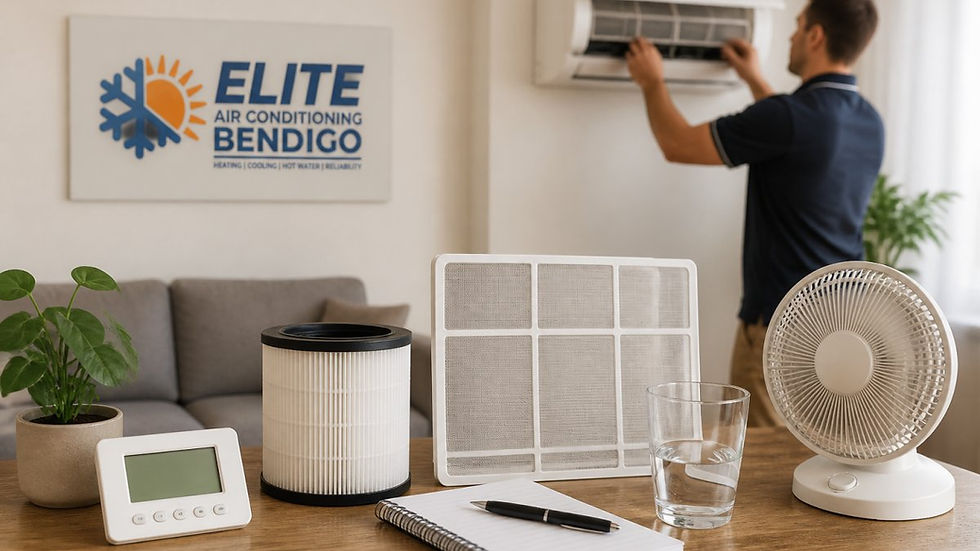
The efficiency of a reverse cycle system depends on heat exchange, the indoor unit absorbs heat from the room air, and the outdoor unit releases it. When filters clog with dust, airflow drops, and the system runs longer to achieve the same temperature. When the outdoor coil accumulates dirt, leaves, or fluff, the heat exchange efficiency falls, and the compressor works harder. The result is higher electricity consumption for the same comfort level, which directly offsets the benefit of the rebate.
A common pattern is that homeowners notice higher bills in the second or third year after installation and assume the system is faulty. In most cases, the issue is simply a dirty filter or an obstructed outdoor unit. Cleaning or replacing the indoor filters every three months takes about ten minutes and costs nothing if you wash them with water. Clearing debris from around the outdoor unit and hosing down the coil once a year prevents the most common efficiency losses.
The Pre-Season Service That Pays for Itself
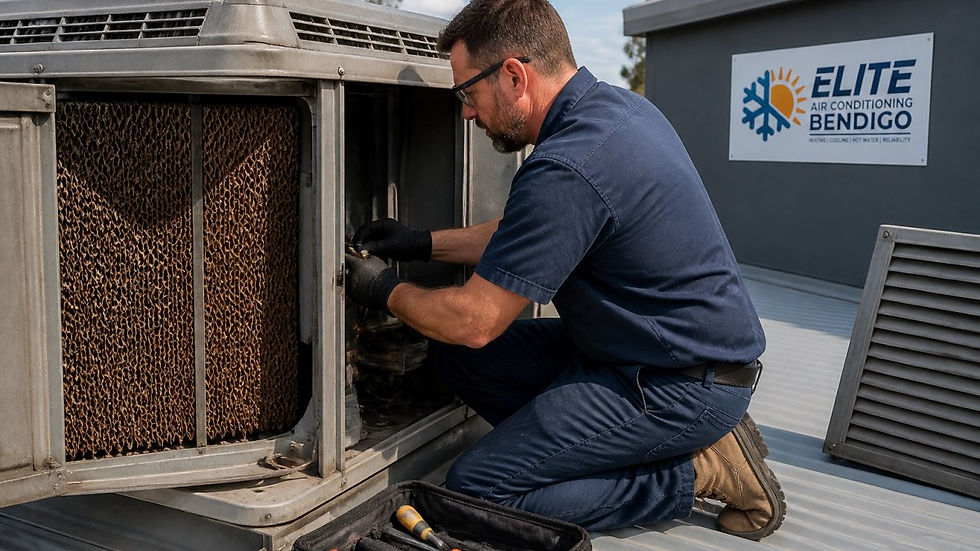
Schedule a professional service before the peak summer and winter periods. A qualified technician checks the refrigerant charge, inspects the electrical connections, cleans the coils, and verifies that the system is operating within its design parameters. A system that is low on refrigerant, which can happen slowly over years, loses heating and cooling capacity while drawing the same electrical power. Topping up the refrigerant and fixing any micro-leaks restores performance and prevents the compressor from cycling excessively.
Pro Tip Set a reminder on your phone for the first week of April and the first week of October. Those are the ideal times to service your system before the heating and cooling seasons peak, when installers are busiest and lead times stretch.
Filter Maintenance by System Type
System Type | Filter Location | Maintenance Frequency | Typical Cost |
Split system | Behind the front panel | Every 3 months | Free (washable) |
Ducted system | Return air grille in ceiling | Every 3 months | Free (washable) |
Ducted system with media filter | Inline in ductwork | Every 6-12 months | $30-$80 per replacement |
The Carbon Footprint Angle Competitors Ignore
Beyond the dollar savings, the environmental benefit of your upgrade depends on how efficiently the system runs over its lifetime. The Victorian Government's energy savings advice highlights that upgrading to efficient electric heating and cooling cuts carbon emissions, since renewable energy now powers a growing share of the grid. But a system running at 80% efficiency because of neglected filters draws more electricity than necessary, which means more grid demand and a larger carbon footprint than the system's rating suggests.
A well-maintained reverse cycle system also avoids the need for premature replacement. The embodied carbon in manufacturing a new unit, the metals, refrigerants, and transport, is significant. Extending the life of your upgraded system from 8 years to 12 years through regular maintenance reduces the overall environmental impact of your heating and cooling setup substantially.
Pairing Maintenance with the Right Energy Plan
Efficiency is only half of the running cost equation. The price you pay per kilowatt-hour varies significantly between electricity retailers and plans. A time-of-use plan may charge less for off-peak electricity, which suits households that run heating overnight or cooling during the day when solar panels are generating. A flat-rate plan is simpler but may cost more overall if your usage peaks in the evening.
A free electricity and gas bill comparison, which accredited providers like Elite Air conditioning Bendigo offer, identifies whether you are on the most suitable plan for your new system's usage pattern. Combining the rebate, regular maintenance, and an appropriate energy plan delivers the full financial and environmental return on your upgrade. Without all three, you are leaving a portion of the potential savings on the table.
Conclusion
Heating and cooling rebates make energy-efficient upgrades accessible, but the value you receive depends on choosing an accredited provider who sizes your system correctly. The process is far less bureaucratic than most homeowners fear, provided you work with someone who handles the application from start to finish. Beyond the upfront discount, the real reward is lower energy bills, better thermal comfort, and a smaller carbon footprint for years to come.
Frequently Asked Questions
How much can I save with heating and cooling rebates in Victoria?
The discount depends on your household circumstances and the system you choose. Rebates are applied as a point-of-sale discount, reducing the upfront cost of an eligible reverse cycle system. For example, replacing an old gas heater with a high-efficiency split system can lower your energy bills noticeably. Contact an accredited VEU provider for a quote that shows the rebate amount applied to your specific situation.
Am I eligible for Victorian Energy Upgrades if I rent my home?
Renters can access rebates if they get written permission from the property owner before starting. The upgrade must be installed by an accredited VEU provider, and the property must meet the eligibility criteria for the activity. Ducted heating replacement often requires the owner's involvement, while a split system installation may be simpler to arrange. Ask your provider about the specific rules for rental properties.
Does the VEU rebate cover the full cost of installation?
No, the rebate is a discount on the total price, not a full subsidy. The VEU program reduces the upfront cost of the system and installation, but you will still pay the remaining balance. The exact discount varies based on the system's capacity and efficiency. An accredited provider will show you the rebate value as a line item on your quote so you know the final price before work starts.
How do I find accredited VEU providers for my upgrade?
Only approved providers can create certificates and apply the discount for you. Look for companies that state they are accredited under the Victorian Energy Upgrades program on their website. Ask if they handle the paperwork as part of the service, since this saves you dealing with the application yourself. A reputable provider will confirm your eligibility and manage the entire process from quote to installation.
The challenge is finding a provider who offers genuine impartial advice rather than pushing the most expensive system. Elite Air conditioning Bendigo combines accredited VEU rebate processing, expert load calculations, and free bill comparisons to ensure your upgrade is sized right and priced fairly. Request a quote today and discover how much you could save on a system tailored to your home.
Request a Quote

Comments