

AC Blowing Warm Air? 7 Checks Before You Call
Table of Contents
Start With the Thermostat and Settings
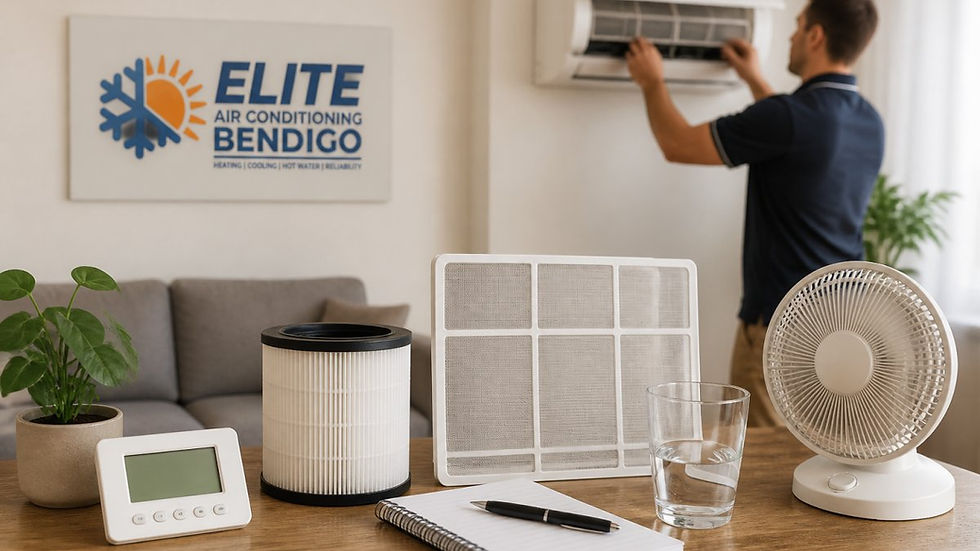
Check the Air Filter and How to Clean Air Conditioner Filters
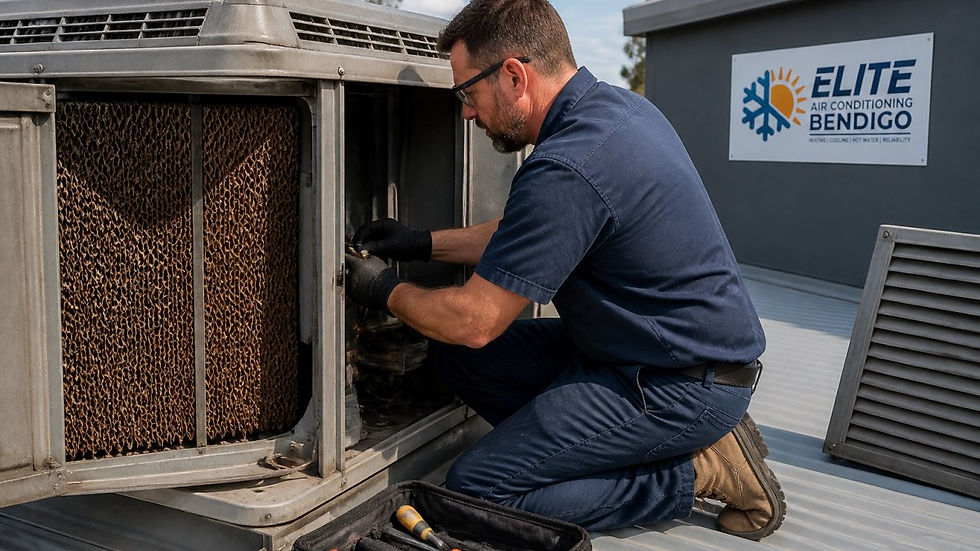
Inspect the Outdoor Unit and Condenser Coils
Look for Signs of Low Refrigerant in Air Conditioner
Test the Circuit Breaker and Electrical ConnectionsThe Capacitor Hazard: What Most Guides Won't Tell YouA Diagnostic Decision Tree for the HomeownerThe Compressor Failure Distinction
The Capacitor Hazard: What Most Guides Won't Tell You
A Diagnostic Decision Tree for the Homeowner
The Compressor Failure Distinction
Know When to Call an HVAC Technician
Your Next Steps for a Cool Home
Frequently Asked Questions
Last Updated: September 7, 2026
Warm air from your vents when the thermostat is set to cool is the most common air conditioning failure, and it rarely means the unit is dead. A split system that suddenly blows warm air usually points to one of a handful of fixable issues, from a simple settings change to a failing component that needs a licensed technician. Before you pay for a service call, work through these seven checks to isolate the cause, and know exactly when DIY ends and professional help begins.
The fastest way to diagnose why your ac blowing warm air is to start with the cheapest fix and move toward the most expensive. Many situations resolve in minutes without any tools, while others require the expertise of an HVAC technician to prevent further damage to the compressor or refrigerant circuit.
Start With the Thermostat and Settings
Check the thermostat mode and fan setting first, because incorrect thermostat settings cause a surprising number of "warm air" calls. Switch the system to "Cool" mode, not "Auto" or "Heat," and set the target temperature at least 5 degrees below the current room temperature. A common mistake is leaving the fan switch on "ON" instead of "AUTO," which circulates warm air from the ductwork even when the cooling cycle has shut off.
The fan setting issue is easy to verify. When the fan runs continuously, you feel room-temperature air moving through the vents between cooling cycles, which feels like warm air on a hot day. Set the fan to "AUTO" so it only pushes air when the compressor is actively cooling, then wait for the temperature differential to stabilise over about 15 minutes.
Pro Tip If you have a smart thermostat, check the app for a schedule override or a "home/away" setting that might have shifted the target temperature. Many homeowners discover the unit is fine, but the thermostat programming is fighting the cooling demand.
Check the Air Filter and How to Clean Air Conditioner Filters
A dirty or clogged air filter is the most common cause of reduced cooling and warm airflow, because it starves the evaporator coils of warm return air. When airflow restriction becomes severe, the evaporator coils can freeze, and you will feel warm air as the ice blocks the cooling cycle entirely (energy.gov).
To clean air conditioner filters, follow this process:
Turn off the system at the thermostat and the isolator switch.
Locate the return air filter grille or the filter slot inside the indoor air handler unit.
Slide the filter out and hold it up to the light. If you cannot see through it, it needs attention.
Vacuum loose dust, then wash washable filters with lukewarm water and mild detergent.
Let the filter dry completely before reinstalling, and replace disposable filters.
Watch Out Running the system with a frozen indoor coil will not cool your home and can damage the compressor. If you see ice on the refrigerant lines or the indoor unit, turn the system off and let it thaw for several hours before replacing the filter and restarting.
Inspect the Outdoor Unit and Condenser Coils
The outdoor condenser unit needs clear airflow to reject heat from the cooling cycle, and blocked or dirty condenser coils will cause warm air inside your home. Check for debris, leaves, grass clippings, or overgrown vegetation within about 60 centimetres of the unit on all sides.

If the condenser coils look matted with dirt, shut off power at the isolator switch, then use a soft brush and a gentle stream from a garden hose to clean the fins vertically. Avoid high-pressure washers, which bend the delicate aluminium fins and restrict airflow further. Straighten any crushed fins with a fin comb, which is an inexpensive tool from a hardware store.
A clean condenser coil makes a measurable difference to cooling capacity and running costs. Many installers recommend a professional coil clean as part of a yearly service, because the outdoor unit sits in the weather and collects grime that a hose cannot fully remove.
Look for Signs of Low Refrigerant in Air Conditioner
Low refrigerant levels in an air conditioner indicate a leak in the sealed system, and the fix is never "top it up." Refrigerant is the working fluid that absorbs heat from your indoor air and releases it outside, so when the charge drops, the cooling capacity falls sharply and the compressor works harder.
Signs of low refrigerant in an air conditioner include:
Warm air from the vents despite a clean filter and clear condenser
Hissing or bubbling noises from the refrigerant lines
Ice forming on the copper suction line or the outdoor unit
Higher running costs as the system runs longer to reach the set temperature
If you suspect a refrigerant leak, stop using the system and call a licensed HVAC technician. Handling refrigerant requires an Australian Refrigerant Handling Licence, and DIY repair of the sealed circuit is illegal and dangerous. A technician will locate the leak, repair it, and recharge the system to the manufacturer's specification.
Key Takeaway Low refrigerant always means a leak. A technician who simply adds gas without finding and fixing the leak is charging you for a temporary fix that will fail again.
Test the Circuit Breaker and Electrical Connections
A tripped circuit breaker or a blown fuse will stop the outdoor unit entirely, leaving the indoor fan blowing warm air. Check your switchboard for a breaker labelled "air conditioner" or "AC" and reset it if it has tripped. If the breaker trips again immediately, there is an electrical fault, and repeated resets risk damaging the compressor.
Electrical issues often involve a failing run capacitor, which gives the compressor and fan motor their starting kick. A swollen or leaking capacitor needs replacement by a technician. Before touching any electrical panel or the outdoor unit, confirm power is off at the isolator switch, because the capacitor stores a dangerous charge even after disconnection.
The Capacitor Hazard: What Most Guides Won't Tell You
Most online guides tell you to "check the capacitor" without explaining why you should not touch it. Here is the reality: a run capacitor stores a charge of 370 to 440 volts, and it holds that charge even after the power is switched off at the isolator. Unlike a battery that drains, a capacitor can hold its charge for days or even weeks. Touching the terminals with a metal tool or your bare hand can deliver a lethal shock.
If you open the electrical compartment of the outdoor unit and see a cylindrical component that looks swollen, bulging, or has oil leaking from the top, that is a failed capacitor. Do not attempt to remove it. The correct response is to close the panel, restore power only if safe to do so, and call a licensed technician. Replacing a capacitor is a five-minute job for a professional with the right tools and training, but it is not a DIY task.
A Diagnostic Decision Tree for the Homeowner
Rather than guessing, work through this simple logic:
Is the outdoor unit running at all? No: Check the breaker. If it is tripped, reset it once. If it trips again within minutes, stop. You have a short circuit or a failing component. Call a technician. Yes: Proceed to step 2.
No: Check the breaker. If it is tripped, reset it once. If it trips again within minutes, stop. You have a short circuit or a failing component. Call a technician.
Yes: Proceed to step 2.
Is the outdoor fan spinning? No: The fan motor or its capacitor may be faulty. This is a technician-level repair. Yes: Proceed to step 3.
No: The fan motor or its capacitor may be faulty. This is a technician-level repair.
Yes: Proceed to step 3.
Is the compressor humming but not starting? Yes: This is a classic sign of a failed start capacitor or a seized compressor. A technician can test the capacitor with a multimeter. If the compressor itself is seized, you are facing a major repair. No: The system may be low on refrigerant, which is covered in the previous section.
Yes: This is a classic sign of a failed start capacitor or a seized compressor. A technician can test the capacitor with a multimeter. If the compressor itself is seized, you are facing a major repair.
No: The system may be low on refrigerant, which is covered in the previous section.
Watch Out If the breaker trips more than once, do not keep resetting it. Each trip stresses the compressor and can cause internal winding damage, turning a $200 electrical repair into a $2,000 compressor replacement. Repeated tripping is your system telling you there is a fault that will not fix itself.
The Compressor Failure Distinction
A failing compressor is the most expensive single component in a split system, often accounting for 40-50% of the unit's total cost (energy.gov). Knowing the difference between a minor electrical issue and a terminal compressor failure can save you from paying for a diagnostic call that ends in a replacement quote.
Signs of a compressor that is failing but not yet dead include:
A loud rumbling or knocking noise from the outdoor unit during startup
The unit struggles to start, taking several seconds to spin up
The circuit breaker trips intermittently, not immediately
Signs of a compressor that has already failed include:
The outdoor unit hums but the compressor will not start at all
The breaker trips immediately every time you reset it
The compressor feels extremely hot to the touch (after power is confirmed off)
If you suspect a terminal compressor failure, the economic decision is rarely to replace just the compressor. When a compressor fails, it often contaminates the entire sealed system with metal debris and acid. A compressor-only replacement on a system older than 8 years is usually not cost-effective compared to a full system replacement, especially when you factor in the labour of recovering refrigerant, brazing in a new compressor, and flushing the lines (aceee.org).
Know When to Call an HVAC Technician
If your ac blowing warm air persists after checking the thermostat, filter, condenser coils, and circuit breaker, the problem likely sits in the sealed refrigerant circuit or the compressor, and both require a licensed technician. Signs of a failing compressor include loud rumbling noises, a unit that struggles to start, and warm air that never improves even after the basics check out.
A professional HVAC technician will measure the system's temperature differential, test electrical components, and check the refrigerant charge with manifold gauges. This system diagnostics process identifies the root cause rather than treating symptoms. Attempting DIY repair beyond filter cleaning and debris removal can void your warranty and create safety risks.
For homeowners in the Bendigo region, Elite Air conditioning Bendigo offers impartial advice across all major brands and can assess whether a repair is worth the cost or whether an upgrade makes better financial sense. Their team also provides expert design and load calculation for replacement systems, so you are not left guessing at the right capacity for your home.
Your Next Steps for a Cool Home
Work through the checks in order: confirm the thermostat and fan settings, clean or replace the air filter, clear the outdoor unit, then test the circuit breaker. If warm air continues, the issue is likely low refrigerant or an electrical fault, and that is the point to call a licensed HVAC technician rather than risk further damage.
Preventative maintenance is the best way to avoid warm-air failures in the first place. An annual service that cleans the condenser and evaporator coils, checks the refrigerant charge, and tests electrical components catches small problems before they become expensive breakdowns.
Frequently Asked Questions
Can a dirty air filter cause an air conditioner to blow warm air?
Yes. A heavily clogged air filter restricts airflow over the evaporator coils. This reduced airflow means the system cannot absorb heat effectively, and the coils can freeze. When airflow is blocked, the warm air in your home stays warm, and the system may overheat. Checking and cleaning or replacing the filter every one to three months is a simple first step. It often resolves the issue without needing a technician.
What are the signs of low refrigerant in an air conditioner?
Common signs include warm air blowing from the vents, ice forming on the copper refrigerant lines or the outdoor unit, a hissing or bubbling noise near the unit, and higher electricity bills due to the system running longer. Low refrigerant usually indicates a leak. This is not a DIY fix. A licensed technician must locate the leak, repair it, and recharge the system to the correct level.
Why is my AC blowing warm air when the power is out?
A standard air conditioner requires mains electricity to run the compressor and fan. During a power outage, the system cannot operate, so it will not produce cool air. If the unit is running but the power is out, you likely have a power supply issue. Check if the circuit breaker for the AC unit has tripped or if a fuse has blown in your switchboard.
Is it safe to run an AC that blows warm air?
Running it briefly for diagnosis is usually fine, but avoid continuous operation. A system blowing warm air may have a serious issue like a failing compressor or low refrigerant. Continuing to run it can cause the compressor to overheat and fail completely, leading to a more costly repair. Turn the system off and switch it to 'Fan Only' mode if you need airflow while you troubleshoot.
Getting warm air from a working air conditioner is frustrating, especially during a heatwave, but most causes are straightforward to diagnose. If your system needs professional attention, the team at Elite Air conditioning Bendigo provides honest service, free on-site quotes, and point-of-sale VEU rebates on eligible upgrades to keep your home cool efficiently. Request a quote today and get a clear answer on whether to repair or replace your system.
Request a Quote

Comments